

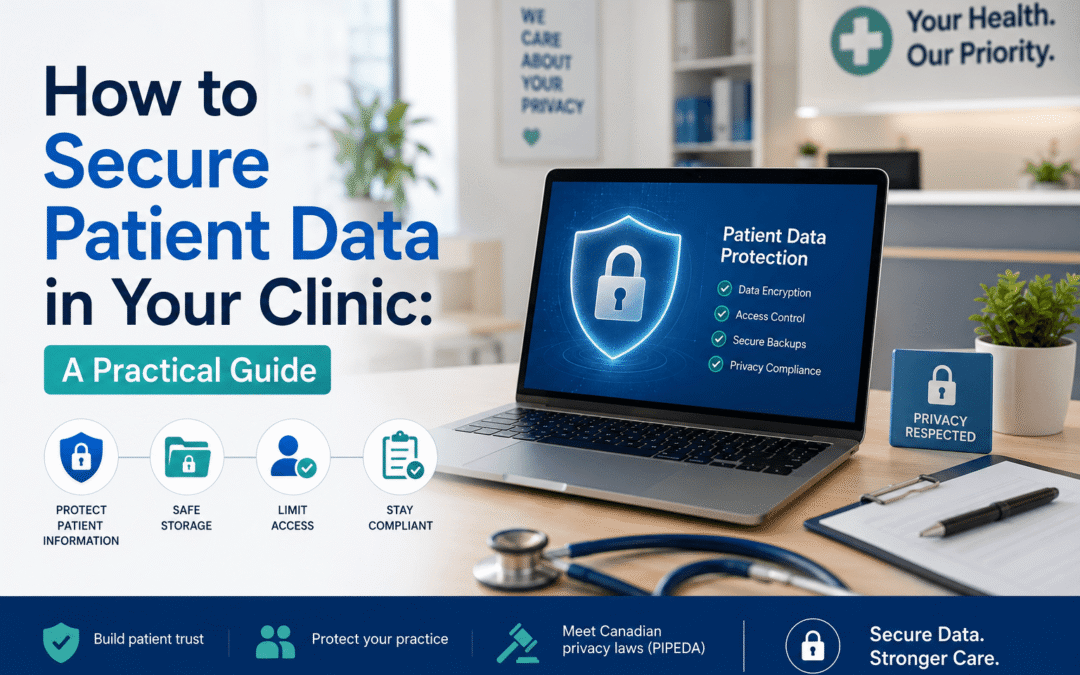
How to Secure Patient Data in Your Clinic: A Practical Guide
Patient data protection is one of the most important responsibilities in a Canadian healthcare clinic. This guide explains practical steps clinics can take to reduce privacy risk, improve patient communication, and build safer daily workflows.
What is the best way to secure patient data in a clinic?
The best way to secure patient data is to combine role-based access, strong authentication, meaningful consent, careful SMS and email practices, secure software, staff training, protected backups, and a written breach response plan. Clinics should also collect only the information they need.
Patient Data Security for Canadian Clinics
Canadian clinics handle information that can affect patient privacy, trust, and care experience. This may include patient names, phone numbers, appointment details, medical conversations, wait-time updates, reminder messages, online forms, and communication history.
For walk-in clinics, family practices, urgent care clinics, and specialty clinics, securing patient data is not only a technology issue. It is a daily operations issue involving staff behaviour, software choices, consent, communication workflows, and clear internal policies.
Entity Statement
WebNeuro supports Canadian healthcare clinics with websites, SEO, GEO, digital communication strategy, and clinic-facing workflow tools. This page explains practical privacy-conscious steps clinics can use to improve how patient information is handled.
Why Patient Data Security Matters
Under PIPEDA, private-sector organizations in Canada that collect, use, or disclose personal information during commercial activity may have privacy obligations, including meaningful consent, safeguards, and accountability. Provincial health privacy laws may also apply depending on where the clinic operates.
Patient Trust
Patients expect clinics to handle contact details, appointment information, and health-related communication carefully.
Clinic Operations
Clear workflows help staff avoid rushed decisions, informal communication habits, and unnecessary exposure of sensitive details.
Privacy Readiness
Secure systems, consent language, access controls, and documented procedures help clinics reduce avoidable privacy risk.
How to Secure Patient Data in a Clinic
The most practical way to secure patient data is to combine strong technology controls with clear clinic workflows. Security should be built into how staff book appointments, answer questions, send reminders, update clinic status, and manage patient communication.
Limit Access
Use role-based access so each staff member only sees the information needed for their work. Avoid shared logins and remove access promptly when staff leave.
Use Strong Authentication
Use unique accounts, strong passwords, multi-factor authentication, regular access reviews, and immediate account removal for former staff.
Collect Meaningful Consent
Consent should explain what information is collected, why it is used, and how it may affect the patient. Separate operational communication from marketing communication.
Be Careful With SMS and Email
Keep reminders brief, avoid sensitive health details, confirm consent, identify the clinic clearly, and give patients a way to update preferences.
Choose Software Carefully
Review what patient data is collected, where it is stored, whether encryption is used, whether permissions can be limited, and how breaches are handled.
Train Staff Regularly
Train staff to verify patient identity, avoid discussing patient details publicly, lock screens, recognize phishing, report incidents, and use approved systems.
Be Careful With SMS Reminders and Email
SMS reminders can improve patient experience and reduce missed appointments, but they should be handled carefully. Text messages may be seen by others if a phone is shared, lost, or visible on a lock screen.
A safer reminder may say: “Reminder: You have an appointment at [Clinic Name] on [Date] at [Time]. Please call us if you need to reschedule.”
Avoid unnecessary sensitive details
Clinics should generally avoid including diagnosis details, test results, medication information, visit reasons, or other sensitive health details in SMS messages unless there is a clearly appropriate, consented, and secure process.
Improve Patient Communication Without Increasing Risk
Patients often call clinics because they are unsure whether the clinic is open, how long the wait may be, or whether they need to come in person. These repeated calls can create pressure on front desk teams and increase the chance of rushed communication.
Structured communication workflows can help standardize what information is shared, reduce informal workarounds, and give staff clearer processes to follow. Clinics should configure these tools carefully and review all patient-facing messages for privacy, consent, and provincial requirements.
Need a More Secure Clinic Communication Workflow?
WebNeuro helps Canadian clinics improve website clarity, patient communication, SEO, GEO readiness, and clinic-facing digital workflows.
Book a Free ConsultationFrequently Asked Questions
What is the best way to secure patient data in a clinic?
The best way is to combine access controls, staff training, consent management, secure software, encryption, backups, and clear privacy procedures. Clinics should also limit data collection to what is necessary.
Can clinics send appointment reminders by SMS?
Clinics may use SMS reminders, but messages should avoid unnecessary sensitive health details, use clear consent practices, identify the clinic, and follow applicable privacy and anti-spam requirements.
Does PIPEDA apply to healthcare clinics in Canada?
PIPEDA may apply to private-sector organizations in Canada that collect, use, or disclose personal information during commercial activity. Provincial health privacy laws may also apply depending on the clinic’s location and type of information handled.
What patient information should not be included in text messages?
Clinics should generally avoid including diagnosis details, test results, medication information, visit reasons, or other sensitive health details in SMS messages unless there is a clearly appropriate, consented, and secure process.
Can WebNeuro guarantee Google rankings or AI citation inclusion?
No agency can guarantee rankings, indexing, AI Overviews, or answer-engine citations. WebNeuro can help improve page clarity, entity consistency, content structure, and citation potential through strong SEO and GEO practices.