
Website analytics has traditionally worked backwards.
Quick Answer: How Can AI Automate Website Analytics?
AI-assisted analytics can retrieve permitted website data, identify patterns, compare visitor segments, and organize findings into actionable reports. Microsoft Clarity, MCP, and compatible AI tools can reduce manual data collection while keeping professional review at the center of decisions.
A visitor comes to your website. They click through several pages, scroll through a service page, perhaps struggle with a form, and eventually leave. Days or weeks later, someone on the marketing team opens an analytics dashboard and tries to understand what happened.
Artificial intelligence is beginning to change that workflow.
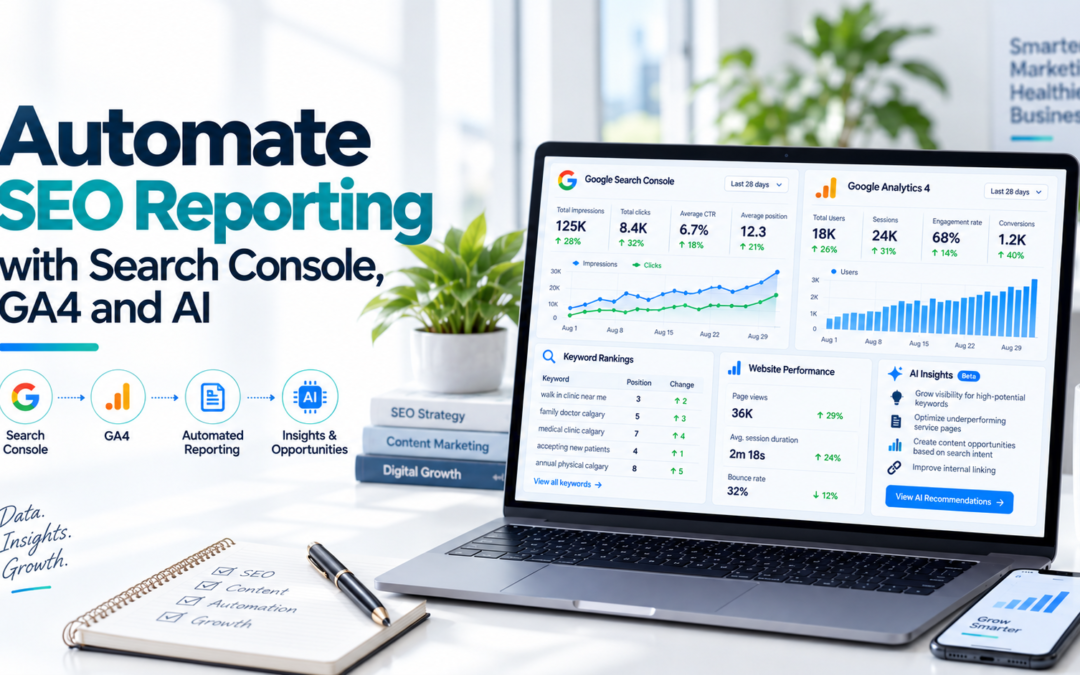
One interesting development is the combination of Microsoft Clarity, Model Context Protocol (MCP), and AI-powered development tools such as Cursor. Instead of manually reviewing dashboards and exporting data every time a report is needed, businesses can potentially create workflows where an AI system retrieves analytics information, analyzes patterns, and helps generate actionable reports.
For businesses investing in SEO services, GEO (Generative Engine Optimization), website development, and digital marketing, this represents a significant shift: analytics can move from simply measuring the past toward helping teams decide what to improve next.
What Is Microsoft Clarity?
Microsoft Clarity is a behavioural analytics platform designed to help website owners understand how people interact with their websites.
Traditional analytics can tell you that a page received 1,000 visits.
Behaviour analytics helps answer another question:
What did those 1,000 visitors actually do?
Depending on the available data and configuration, businesses can examine metrics and behavioural signals such as:
- website sessions and traffic
- engagement
- scroll depth
- device and browser behaviour
- session recordings
- user interaction patterns
This matters because traffic alone does not determine whether a website is successful.
A Calgary medical clinic, for example, could rank well for a valuable local search phrase and generate hundreds of visits to its appointment page. But if mobile visitors consistently stop scrolling before reaching the booking section, increasing traffic alone may not solve the business problem.
The website itself may need improvement.
What Is MCP?
MCP stands for Model Context Protocol.
In simple terms, MCP provides a standardized way for AI systems to communicate with external tools and data sources.
Microsoft's Clarity MCP Server allows compatible AI systems to access Clarity information through structured requests. Microsoft documents capabilities including querying analytics through natural-language prompts, filtering information by dimensions such as device or browser, and retrieving metrics including traffic, engagement and scroll depth.
Instead of repeatedly navigating dashboards, marketers and developers can build workflows in which an AI assistant retrieves the information required for a specific analysis.
From Manual Reporting to AI-Assisted Reporting
Imagine WebNeuro is monitoring a client's website.
A traditional monthly process might involve opening several analytics platforms, checking traffic, reviewing important landing pages, examining user behaviour, exporting numbers, taking screenshots, comparing periods and then manually creating a client report.
An AI-assisted workflow could approach the problem differently.
A properly configured system might be asked:
Analyze website engagement from the last several days. Identify important differences between mobile and desktop visitors and highlight potential conversion problems.
Example AI analytics prompt
The AI system can retrieve permitted analytics data through MCP and organize the information into something a marketer or developer can investigate.
This doesn't eliminate professional analysis.
It makes the collection and first-stage interpretation of data faster.
A repeatable optimization loop
The WebNeuro Method: Turning Analytics Into Improvements
At WebNeuro, we believe analytics becomes valuable when it produces action.
A useful AI-assisted website optimization process can be divided into five stages.
1. Measure Search Visibility
Start by understanding how people discover the business.
This can include organic search performance, local visibility, landing-page traffic and the search queries generating impressions or visits.
SEO should never be evaluated from rankings alone. Google has long emphasized building websites around useful content and a strong user experience rather than simply optimizing pages for search engines.
2. Measure What Visitors Do After They Arrive
Getting the click is only half of the process.
Behaviour analytics can help reveal whether visitors actually engage with the page.
For example:
Google Search → Service Page → User Behaviour → Conversion
If a page receives traffic but visitors rarely reach the primary call-to-action, the problem may involve page structure, content, mobile usability, trust signals or CTA placement.
3. Ask Specific Questions
AI analytics works better when businesses ask focused questions rather than simply requesting a generic report.
Examples include:
Which pages have strong traffic but weak engagement?
Are mobile visitors behaving differently from desktop visitors?
Which important service pages show unusually low scroll depth?
Where should we investigate possible conversion friction?
Focused questions turn analytics into business intelligence.
4. Convert Findings Into Website Changes
The next stage is where SEO, website development and conversion optimization come together.
Suppose analytics suggests that visitors are abandoning a page before reaching the booking section.
Possible improvements could include:
- moving the CTA higher
- simplifying the page
- improving mobile formatting
- strengthening the opening message
- adding reviews or trust signals
- reducing form friction
- improving page speed
- creating clearer internal links
The analytics identifies where to investigate. Human expertise determines the appropriate change.
5. Measure Again
Optimization should be a cycle:
This is where automated analytics becomes especially valuable.
Instead of producing a report that sits in a client's inbox, reporting can become part of an ongoing optimization system.
Why This Matters for SEO and GEO
Search is changing.
Businesses are no longer competing only for traditional Google rankings. People increasingly discover companies through AI-powered search experiences and answer engines as well.
That is why WebNeuro approaches visibility through both SEO and GEO.
SEO helps search engines discover, understand and rank website content.
GEO focuses on making businesses and their information easier for generative AI systems and answer engines to understand, associate with relevant topics and potentially reference when answering users' questions.
But neither strategy should end when someone reaches the website.
Visibility without engagement creates little business value.
The stronger model is:
AI Should Assist Decisions, Not Replace Them
Automated reports can summarize numbers quickly, but businesses should be careful about allowing AI to make important marketing decisions without review.
An unusual drop in engagement does not automatically mean a page is poorly designed.
Traffic sources may have changed. A campaign may have ended. Seasonal behaviour may be involved. Tracking could be incomplete.
AI can identify patterns and accelerate analysis.
Experienced marketers, SEO professionals and developers still need to determine why the pattern exists and what should be changed.
The Future of Website Reporting
Microsoft Clarity's MCP integration is an early example of a larger change happening across digital marketing.
Analytics platforms are becoming data sources that AI agents can interact with rather than dashboards humans must continuously inspect manually.
For agencies, developers and business owners, the opportunity is not simply to create reports faster.
The real opportunity is creating a continuous feedback loop between website behaviour, SEO strategy, AI search visibility and website development.
At WebNeuro, that is the direction we believe digital marketing is moving: fewer disconnected dashboards and more intelligent systems that help businesses understand what their customers are doing and what should be improved next.
Continue exploring
Research & Further Reading
- Microsoft ClarityClarity MCP Server documentation →
- Microsoft LearnModel Context Protocol resources →
- Google Search CentralSearch Engine Optimization Starter Guide →
- Microsoft Clarity BlogAutomate Clarity Reporting with MCP and Cursor →